
Lay Formation Program Overview
The Nebraska District LCMS is piloting a strategic program to equip and resource laity for ministry in all areas of life. Through intentional investment in biblical understanding, practical ministry skills, and meaningful relationships, the Lay Formation program creates space for participants to grow as disciples of Jesus, discover how God is calling them to serve, and put their learning into action.
Learning Objectives
The Lay Formation program seeks to cultivate Christians who are prepared to live out their faith and serve God in every sphere of life. Participants will:
- Clarify their personal calling and develop a deeper sense of vocational living
- Be encouraged in their spiritual gifts and talents
- Apply a biblical and Lutheran Confessional understanding
- Practice Christian community through prayer, listening, and discipling conversations
- Learn alongside other faithful Christians
- Adopt a practical application of new leadership skills
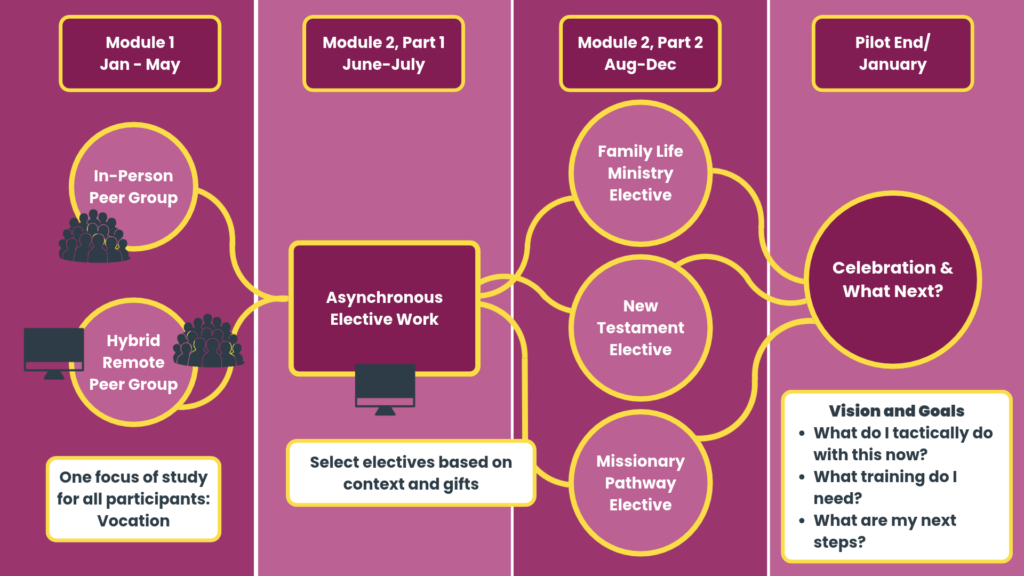
Module 1 -Vocation (January-May)
Resources: Vocation Participant Guide and God at Work, Veith (2002)
Lay Formation approaches vocation from a theological perspective, using these resources along with Scripture to help participants explore how God works through them in their families, workplaces, congregations, and communities.
Format: Facilitated, Cohort-Based Peer Learning
Cohorts will meet eight times for two-hour sessions from January through May and are led by a specially trained facilitator who creates a supportive environment for learning and growth. Rather than delivering information, the facilitator partners with peer groups by neutrally guiding them.The learning experience combines individual preparation through preliminary questions, readings, written reflection, and life application. During their peer group sessions they will learn from one another through thoughtful conversation, prayer, and plan how to put their learning into practice. The journey may take participants down a road they have never traveled before. They are sitting in the driver’s seat, while the Holy Spirit serves as their trusted navigator.
To make Lay Formation accessible to congregations across the Nebraska District, participants will have two options for engaging in the cohort experience. Each cohort will include participants from four congregations, with three lay members from each congregation. Both formats follow the same curriculum, learning objectives, and program structure.
In-Person Cohorts: Participants will gather at a designated host church for facilitated peer group sessions, meeting face-to-face with participants from nearby congregations.
Hybrid Cohorts: Three participants will gather at their own home church and connect virtually with the facilitator and participants from other congregations. This format provides the same facilitated peer learning experience while allowing participants to remain at their local congregation.
Module 2 – Elective Focus Area Courses (June-November)
Module 2 provides participants with an opportunity to explore a particular area of ministry that connects with their interests, gifts, and vocational calling.
Format: Virtual, Facilitated Peer Learning
Midway through Module 1, participants will receive information about the elective options and have an opportunity to view introductory videos from each facilitator. This will help them prayerfully consider which learning path they believe the Holy Spirit is leading them to. Self-paced elective summer prep work and Module 1 prayer groups continue through June and July.
Elective Courses: Three topics. Eight sessions in the elective selected from August-November.
1. Missionary Pathway (Rev. Matt Peeples): Many Christians are passionate about their faith but may feel insecure or uncertain when it comes to sharing it with others, especially in a culture where interest in the church seems limited. This elective introduces missional practices that equip participants to live out their faith with a simple, repeatable framework for community engagement allowing them to be more intentional as God makes disciples in the everyday places they work, learn, and play.
2. New Testament (Rev. Dr. Will Miller): This elective takes a thematic approach to exploring the New Testament, uncovering deeper stories, perspectives, and shared experiences. Participants will grow in their love for the New Testament, develop a greater understanding of how to read it, and practice living out their faith in the way Jesus modeled for us.
3. Family Ministry (Deb Jurchen, Director of Family Life Ministry): This elective will help participants explore how to cultivate a household of faith that equips and encourages margin-less parents in lifelong discipleship in Christ. Learning how to grow in the knowledge of His saving grace and model a daily life of faith within their homes to nurture the next generation of disciples. Participants will also discover the value of an intergenerational faith community that prays for and with one another, walking alongside families as fellow broken and redeemed children of God.
Celebration and Sending (December and January)
“Where do I go from here?” In December participants will reconnect with their Module 1 peer groups and use a self-directed packet to complete a Life Journey Mapping process. Through this they will develop their Vision and Goals which they will share in-person with all participants at the final closing celebration held in January of the following year.
Partner with us in prayer
The Nebraska District Lay Formation process is a crucial step in continuing to equip the local church to raise up laity for meaningful ministry. By responding to the biblical call to equip God’s people for works of service (Ephesians 4:12-13) and by addressing pastoral and church worker shortages, overburdened church staff, and the need for deeper engagement, this process will foster healthier congregations and communities. We ask you to pray for a successful project launch with our pilot group, for the resources to pave the way for sustainable leadership development, and that this process would strengthen the Church’s mission to share the Good News of Jesus Christ. We anticipate opening this process to more congregations after the completion and evaluation of the 2027 pilot phase.
Questions can be sent to karib@ndlcms.org.